El Niño 2026: What It Means for India’s Monsoon, Agriculture, and Economy
Description
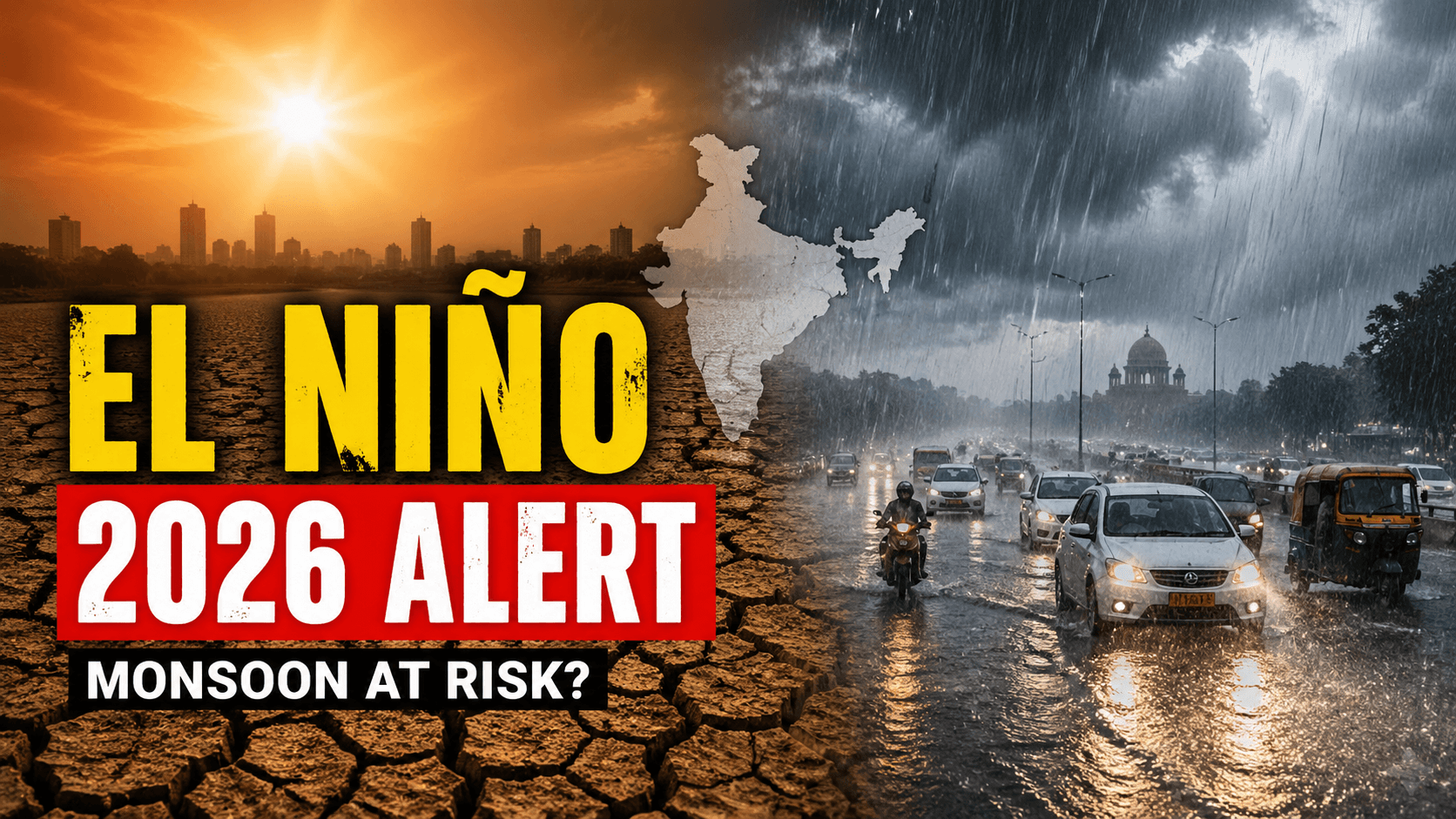
El Niño may return in 2026, potentially affecting India’s monsoon, agriculture, and economy. Here’s a clear explanation of its impact and what to expect.
Introduction
Global weather agencies, including the World Meteorological Organization and India Meteorological Department, have indicated a growing likelihood of El Niño conditions developing in mid-2026.
If it forms, this climate pattern could influence India’s monsoon, temperatures, and agricultural output. While forecasts are still evolving, early indicators suggest the need for close monitoring in the coming months.
What Is El Niño?
El Niño is a climate phenomenon involving the warming of sea surface temperatures in the central and eastern Pacific Ocean. It is part of the broader El Niño–Southern Oscillation (ENSO) cycle, which also includes the cooler phase known as La Niña.
This warming can disrupt global weather patterns, including:
- Rainfall distribution
- Wind circulation
- Temperature patterns
These changes can affect multiple regions, including India.
How El Niño Affects India
India’s agriculture and economy are closely linked to the southwest monsoon, which provides a major share of annual rainfall.
During El Niño years, the monsoon may:
- Become weaker or uneven
- Deliver below-average rainfall in some regions
- Affect crop cycles and water availability
Historical observations suggest that several past El Niño years coincided with lower-than-average rainfall in India.
2026 Forecast: What Current Data Suggests
Recent updates indicate that:
- Ocean temperatures in the Pacific are rising
- El Niño may develop between May and July 2026
- There is a moderate probability of it strengthening later in the year
The India Meteorological Department has also indicated the possibility of below-normal monsoon conditions, though final projections will depend on evolving weather patterns.
Key Risks for India
1. Uneven or Weaker Monsoon
Rainfall may vary across regions, with some areas receiving less precipitation during critical agricultural months.
2. Higher Temperatures and Heatwaves
El Niño conditions are often associated with above-normal temperatures, which can:
- Increase heat stress
- Affect water demand
- Impact productivity
3. Agricultural Impact
Lower rainfall and higher temperatures may affect crops such as:
- Rice
- Cotton
- Soybean
This could influence both yield and crop quality.
4. Economic Effects
Agriculture contributes significantly to rural livelihoods and economic activity. Variations in monsoon performance may:
- Affect rural income
- Influence food prices
- Impact related sectors such as fertilizers and irrigation
5. Water and Environmental Concerns
- Reduced reservoir levels
- Lower groundwater recharge
- Increased pressure on drinking water supply
Broader Climate Context
El Niño also affects weather globally. While India may experience drier conditions, other regions can see:
- Increased rainfall or flooding
- Shifts in temperature patterns
It can also contribute to higher global average temperatures.
Preparedness and Mitigation
Experts suggest several measures to reduce risks:
- Efficient water management
- Adoption of drought-resistant crops
- Strengthening crop insurance schemes
- Improved weather forecasting and advisories
Government initiatives and infrastructure improvements may help reduce the overall impact compared to previous decades.
Frequently Asked Questions
What is El Niño?
A climate pattern caused by warming ocean temperatures in the Pacific, affecting global weather.
Will El Niño affect India’s monsoon in 2026?
There is a possibility of impact, but the exact outcome will depend on how the event develops.
Which sectors are most affected?
Agriculture, water resources, and rural economy are typically most sensitive to monsoon variations.
Conclusion
El Niño 2026 could influence India’s weather patterns, particularly the monsoon and temperature trends. While early forecasts suggest potential challenges, ongoing monitoring and preparedness can help manage risks.
Keeping track of updates from agencies like the India Meteorological Department will be important as the situation evolves.